A stretch of canal can look like nothing in particular. Quiet water, a worn path, a lock mechanism rusting at the edges. What it rarely looks like is what it was: a corridor of industry so dense and varied that the air above it would have carried the combined smell of iron, rope, acid, and vinegar simultaneously.
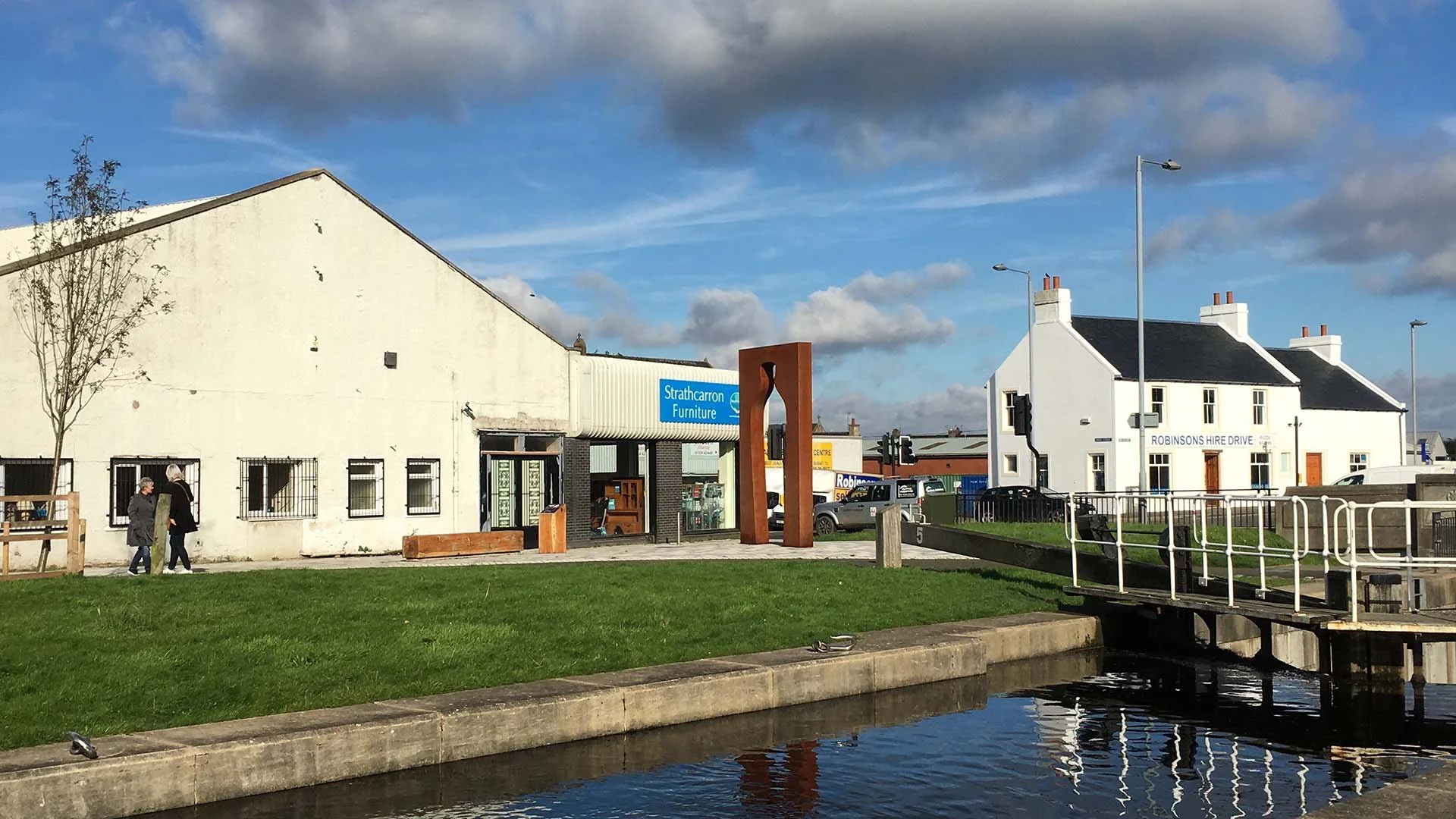
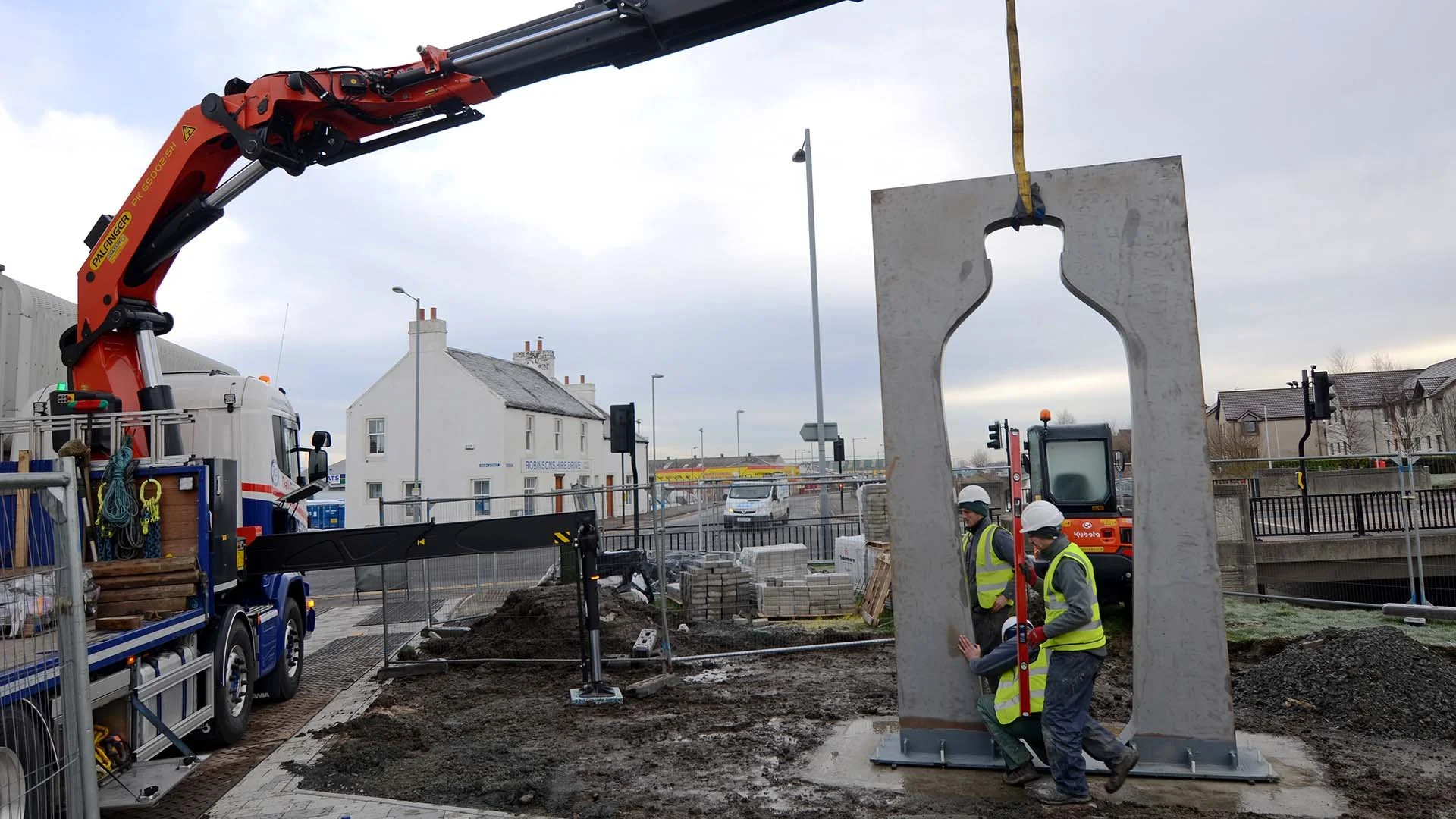
The vinegar bottle installation at Bankside was conceived to return that invisible history to the surface. In 1854, Mr McAuley’s Vinegar Works stood close to Lock 5 on this exact stretch of the Forth & Clyde Canal, one of dozens of industries that crowded the banks in the mid-1800s, when this quiet waterway was one of the busiest commercial corridors in central Scotland. Iron foundries, chemical works, rope walks, and vinegar production operated in proximity, each one dependent on the canal for the movement of raw materials and finished goods.
A sculptural vinegar bottle on the canal path does not explain that history. It embodies it: a familiar domestic form made monumental, specific to this location, carrying the story of a place that most people walking past would never otherwise know existed.
At goodstrife, that is the ambition for every public installation. Not interpretation. Not signage dressed as art. An object that belongs so completely to its location that it could not exist anywhere else, and that makes the place feel, for a moment, like the extraordinary thing it actually is.