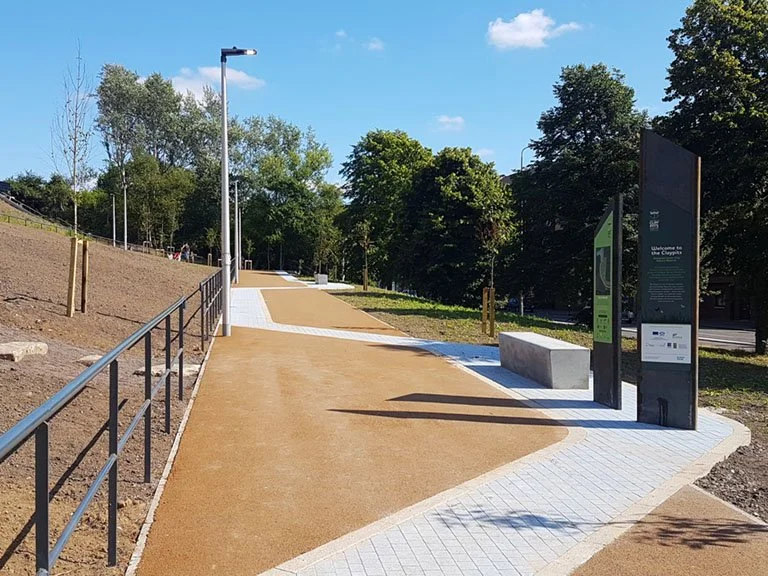

Less than a kilometre from Glasgow city centre, the Claypits site had been hiding in plain sight, an industrial remnant slowly reclaimed by nature, sitting at the edge of communities that had long been disconnected from the green space on their doorstep.
The work here was never simply about branding a nature reserve. It was about making a place legible, welcoming, and genuinely theirs. Working alongside LUC, the identity draws honestly from the site’s past: the grit and industry of the canal corridor, softened by what has quietly taken root since. The dragonfly, abundant, local, and unexpectedly vivid, became the natural mascot, threading through the identity and the wooded walks alongside the Forth & Clyde Canal.
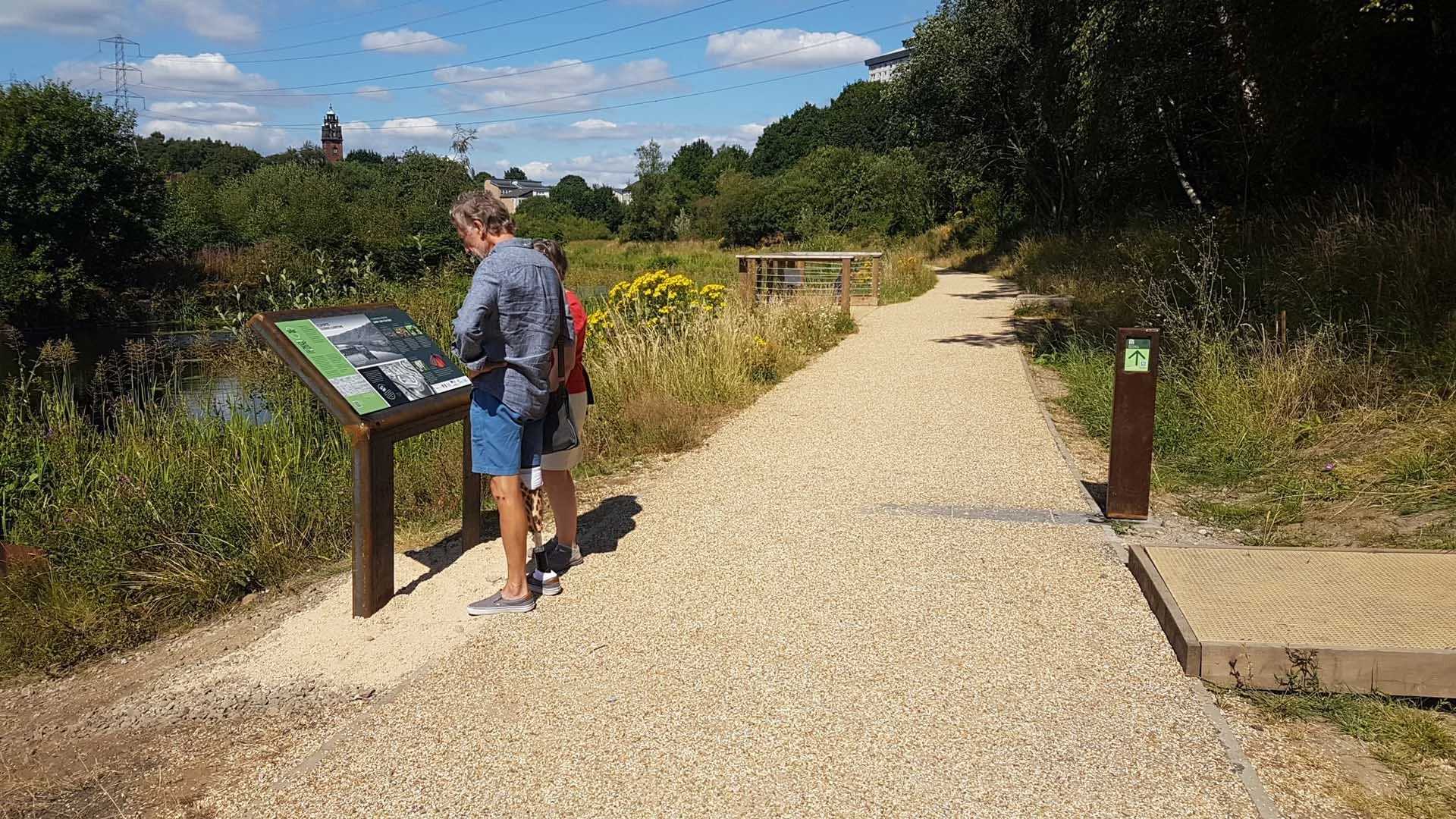
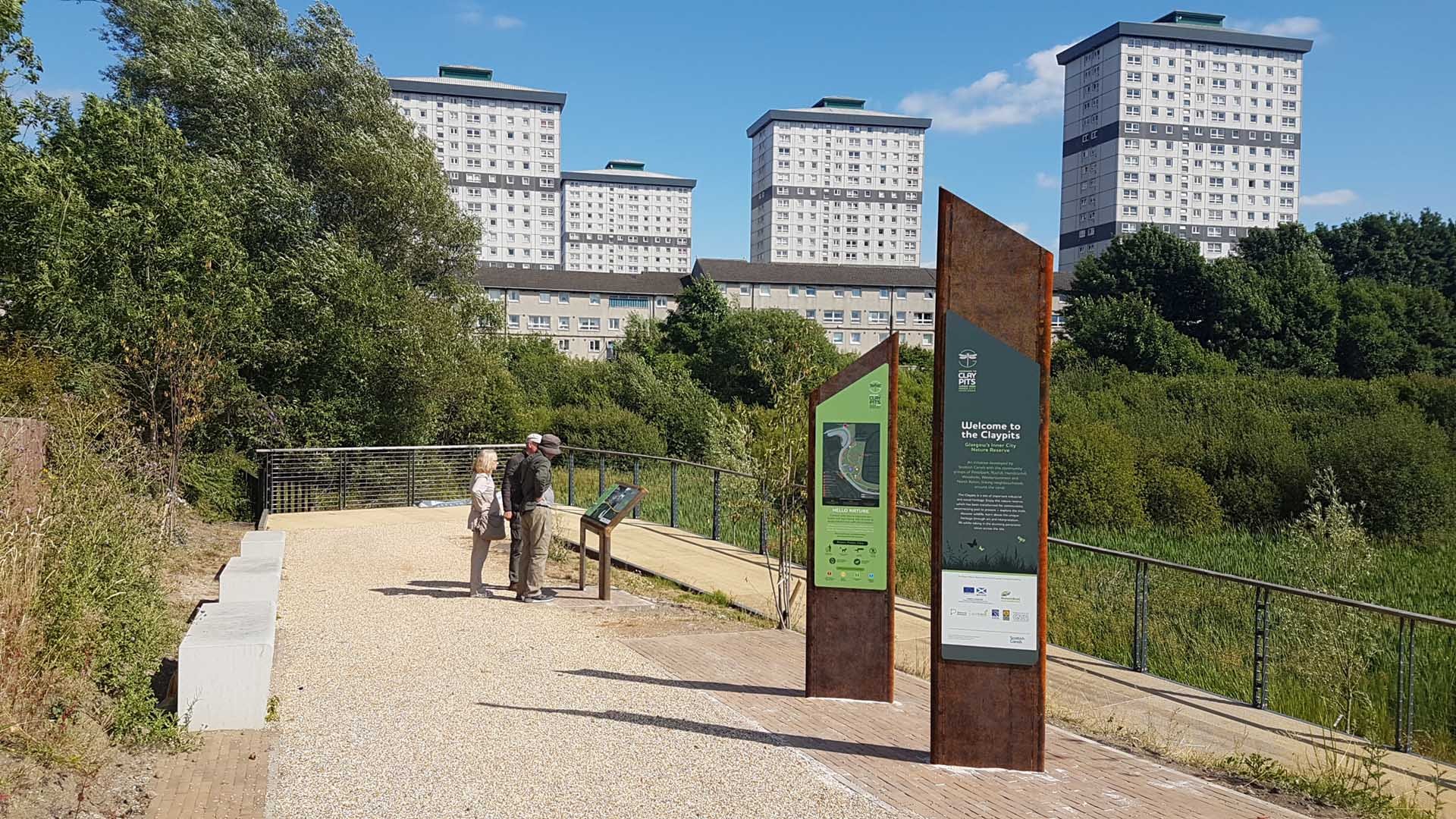
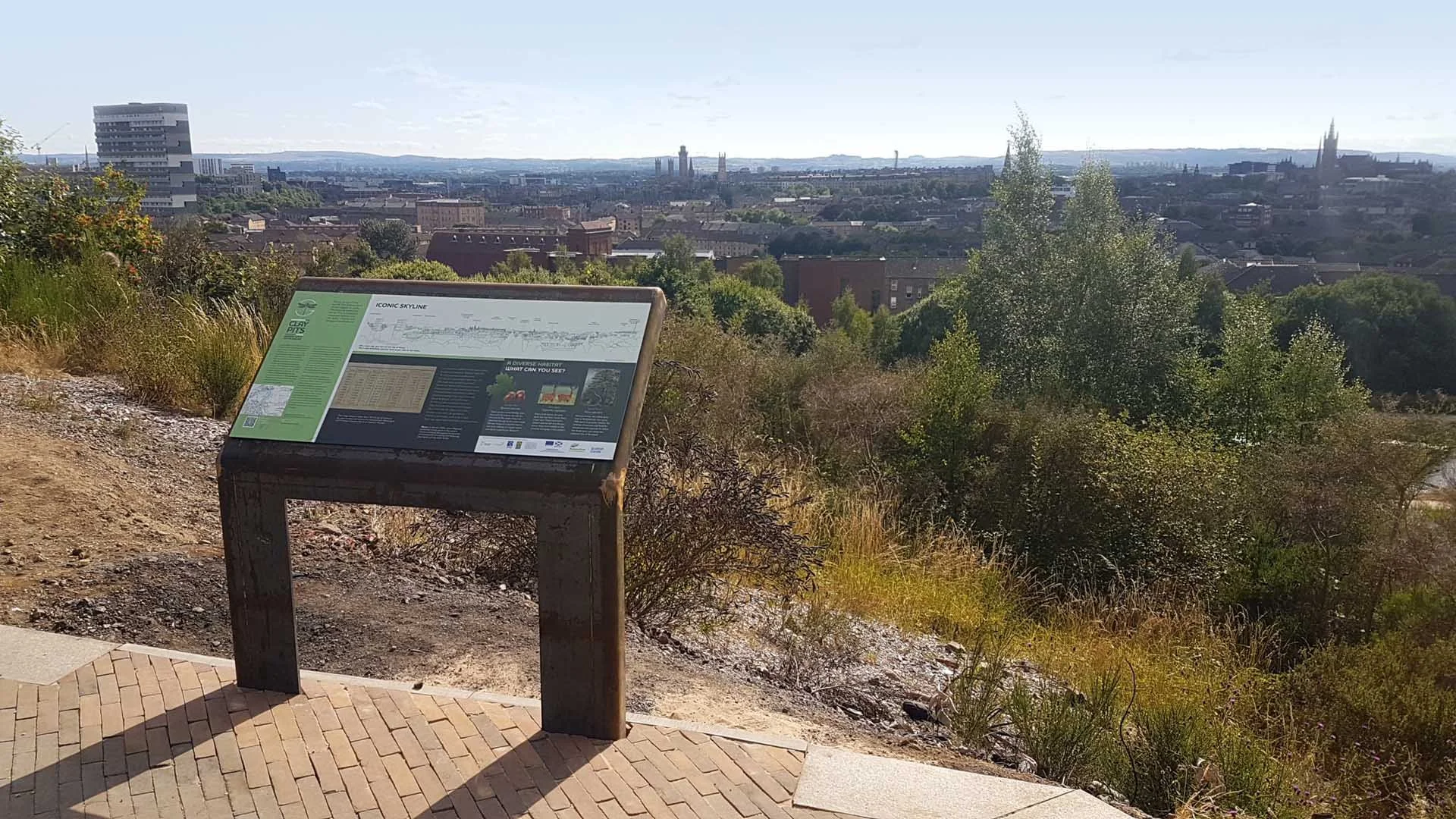
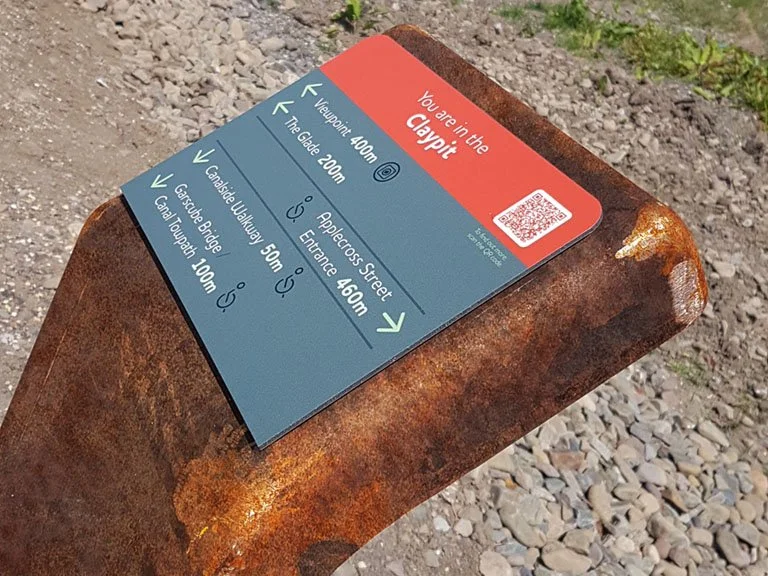
The wayfinding system was designed to do two things with equal confidence: guide visitors through the reserve itself, and connect them back out into the heart of Glasgow, making the city and its nature reserve feel like a single, continuous experience rather than separate worlds. QR codes woven into the signage extended that experience further still, layering digital depth onto physical infrastructure and giving curious visitors a reason to look closer. At the reserve’s highest point, a newly commissioned interpretation panel captures the Glasgow skyline in illustration, anchoring the site in its city while celebrating how much wildness survives within it.